
Managing digital signage across multiple cafe or QSR locations does not need to be complicated. Here is how Australian multi-site operators are using digital signage.

Managing a single cafe or QSR venue with digital signage is straightforward. Managing five, ten or twenty locations is a different challenge entirely, and one that printed menu boards handle particularly badly.
For multi-site operators, the value of digital signage and menu boards goes well beyond replacing printed menus. It is about having a complete, real-time overview of what is showing on every screen across every venue, the ability to push a change across all locations simultaneously and the confidence that every site is presenting the same menu, pricing and brand identity to customers.
Without digital signage, keeping menus consistent across multiple locations requires a coordinated effort every single time something changes. A price update means new printed materials designed, produced, shipped and physically installed at every site. A promotional campaign means the same process repeated on a tighter timeline. A product being discontinued means someone visiting or calling each location to make sure the old menu comes down.
The cumulative cost of that process, measured in design fees, printing costs, staff time and travel, is significant. But the less visible cost is inconsistency. When one site is still running an old price or a discontinued item because the printed board has not been replaced yet, it creates customer service issues and potential compliance problems.
One of the most valued benefits multi-site operators report after switching to digital signage software is the operational visibility it provides. Through a centralised dashboard, operators can see exactly what is showing on every screen at every location in real time, confirm that updates have been applied correctly and identify any screens that require attention.
For a group managing ten locations across a city or region, this level of oversight would previously have required either a dedicated field team or a trust-based approach that left room for inconsistency. Digital signage software makes it a standard part of day-to-day operations, accessible from any device without leaving the office.
Menu standardisation is one of the most operationally valuable outcomes of a well-implemented multi-site digital signage strategy. When every location is drawing from the same content management system, the core menu, pricing and promotional content are consistent by default rather than by effort.
At the same time, cloud-based signage software allows for localised variations where needed. A location that stocks a regional special or operates different trading hours can display location-specific content alongside the standardised group menu, all managed from the same central dashboard without requiring separate systems or manual workarounds.
The digital signage software options available vary significantly in pricing and capability, worth reading before you decide how to structure your vendor arrangement.
Sana Mediterranean, a multi-site Australian QSR operator, is a good example of how this works in practice. By moving to centralised digital signage management, they eliminated the need for manual USB updates across each site, cut travel time and parking costs entirely and reduced the weekly admin overhead for menu management by an average of four hours. The broader benefit was that every location consistently reflected current pricing and promotions without the lag that came with printed materials.
For multi-site operators, brand consistency is both a commercial priority and a practical challenge. Customers who visit multiple locations of the same brand expect the same visual experience. When signage varies between sites, whether in layout, colour, typography or promotional content, it erodes the sense of a coherent brand.
Digital signage managed through a central content system ensures that the approved templates, brand colours and content hierarchy are applied consistently across every screen at every location. Updates to brand assets are made once and distributed automatically. There is no risk of one site continuing to run outdated branding because the new printed materials have not arrived yet.
The software choice matters more for multi-site operators than for single-venue businesses. A platform that works well for two locations needs to scale cleanly to ten without becoming difficult to manage or prohibitively expensive.
Fusion Signage is the platform Display Australia recommends and resells for multi-site cafe and QSR groups. It is Australian-built with local support, offers genuine centralised management across unlimited locations and is priced on a per-screen, per-month basis that scales proportionally rather than requiring enterprise licensing. The platform's interface is accessible enough that both head office teams and individual site managers can use it confidently without technical training.
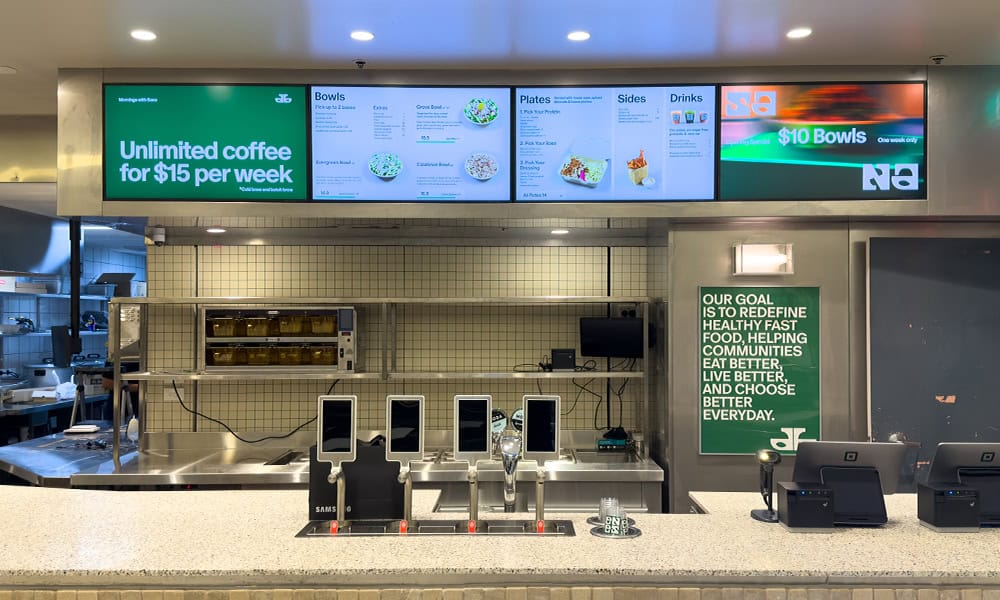
For operators rolling out digital signage across multiple locations simultaneously, hardware consistency and pre-configuration are particularly important. Screens that arrive on-site unconfigured require setup time at each location, which multiplies across a multi-site rollout and introduces the risk of inconsistent configuration between venues.
Display Australia offers pre-configuration services for all hardware supplied as part of a multi-site rollout. Displays arrive at each location already configured for the relevant network, software registration and display settings. Installation is faster, more consistent and generates fewer follow-up support calls.
Samsung QBC and QMC series displays and LG UH5N panels are the most commonly specified hardware across multi-site cafe and QSR installations. All three include built-in system-on-chip players, reducing the number of components required at each location and simplifying ongoing maintenance.
Cloud-based digital signage software lets operators manage content across all locations from a single dashboard. Menu updates, pricing changes and promotional campaigns are made once and pushed live across every screen at every venue at the same time. Operators can see what is showing on each screen in real time, confirm updates have gone through and identify any screens that need attention, without visiting any of the sites.
Yes. Centralised platforms allow for location-specific variations alongside a standardised group menu. A venue running a regional special or different trading hours can display its own content without needing a separate system or manual workarounds. The whole thing is managed from the same dashboard. Consistency where it matters, flexibility where it is needed.
When content is managed centrally, approved templates, brand colours and layout hierarchy apply across every screen at every location. Updates to brand assets are made once and distributed automatically. There is no risk of one site running outdated branding because new printed materials have not arrived yet.
Display Australia recommends and resells Fusion Signage for multi-site café and QSR groups. It is Australian-built with local support, offers centralised management across unlimited locations and is priced per screen per month rather than requiring enterprise licensing. Both head office teams and individual site managers can use it without technical training.
Pre-configuration means screens arrive at each location already set up for the relevant network, software registration and display settings. That removes on-site configuration from the installation process, which matters because the time and risk involved multiply across a multi-site rollout. Installation is faster, more consistent between locations and generates fewer follow-up support calls. Display Australia pre-configures all hardware supplied as part of a multi-site rollout.
The savings add up quickly. Sana Mediterranean, an Australian multi-site café operator, cut their weekly menu management time by around four hours per week after moving to centralised digital signage. USB-based manual updates at each site were eliminated entirely, along with the travel time and parking costs that went with them. For most multi-site groups, the combined savings across design, printing, delivery and on-site replacement of printed materials deliver a return within the first year.
The Samsung QBC and QMC series and the LG UH5N are the most commonly specified displays for multi-site café and QSR installations. All three have built-in system-on-chip players, which reduces the number of components at each location and simplifies ongoing maintenance. Running consistent hardware across a network also makes support more straightforward: the same configuration, the same troubleshooting process and the same replacement parts at every site.
